
How Drumming Improves Concentration and Academic Performance
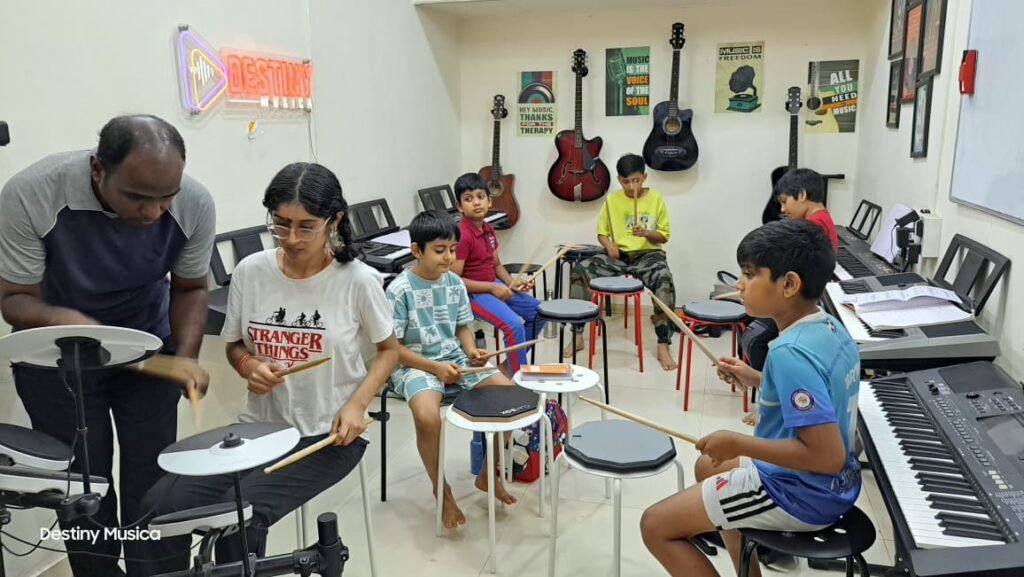
In today’s fast-paced world, maintaining concentration has become increasingly difficult for both children and adults. With digital distractions, academic pressure, and endless multitasking, parents are actively looking for activities that naturally improve focus, discipline, and learning abilities. Along with enrolling children in music classes in mulund, guitar classes in mulund, and even drama classes in mulund to enhance creativity and communication skills, many families are now discovering the remarkable cognitive benefits of learning drums. More than just an exciting musical instrument, drumming has proven to be an effective way to sharpen concentration, improve memory, and support better academic performance.
Drumming is often seen as an energetic and entertaining musical activity, but its benefits go far beyond creating rhythms. Scientific studies and music educators have consistently found that learning to play the drums strengthens brain function, improves concentration, enhances memory, and positively impacts academic performance.
Whether a child is preparing for school exams or an adult wants to sharpen focus at work, learning drums can significantly improve cognitive skills while making the learning process enjoyable.
In this article, we’ll explore how drumming supports brain development, boosts academic success, and why it’s becoming one of the most recommended musical activities for students.
Why Drumming is More Than Just Music
Many people think drumming is simply about hitting drums in rhythm. In reality, drumming is a complete brain workout.
When playing the drums, a person simultaneously uses:
- Both hands independently
- Both feet independently
- Eyes to read rhythms
- Ears to listen carefully
- Brain to process timing and coordination
This combination activates multiple areas of the brain at the same time, encouraging stronger neural connections that improve concentration and learning.
Unlike passive entertainment, drumming requires complete mental engagement from start to finish.
The Science Behind Drumming and Brain Development
Researchers have found that rhythm-based learning stimulates both the left and right hemispheres of the brain.
The left side helps with:
- Logic
- Sequencing
- Mathematical thinking
The right side contributes to:
- Creativity
- Emotional understanding
- Musical interpretation
Drumming forces both sides of the brain to work together, improving communication between them. This results in faster information processing, better memory retention, and stronger attention spans.
Children who regularly participate in rhythm-based music activities often develop improved cognitive abilities compared to those who don’t receive musical training.
How Drumming Improves Concentration
1. Builds Sustained Attention
Learning drums requires continuous concentration.
Students must:
- Count beats accurately
- Follow rhythm patterns
- Watch hand movements
- Coordinate foot pedals
- Listen carefully to tempo
Missing focus for even a few seconds can interrupt the entire rhythm.
Regular practice gradually trains the brain to maintain attention for longer periods, a skill that directly benefits classroom learning.
2. Reduces Mental Distractions
Drumming naturally creates a state of deep focus.
During practice, the mind becomes fully occupied with rhythm, timing, and coordination.
This reduces:
- Overthinking
- Stress
- Digital distractions
- Wandering thoughts
Many students find that regular drum practice helps them remain calmer and more attentive during school hours.
3. Improves Listening Skills
Listening is one of the most underrated academic skills.
Drummers constantly train themselves to:
- Identify rhythm changes
- Match tempo
- Listen carefully to instructors
- Synchronize with other musicians
Improved listening translates directly into better classroom participation and stronger communication skills.
Drumming and Academic Performance
Parents are often surprised to learn that music education supports academic success.
Here’s how drumming contributes to better learning outcomes.
Better Memory
Learning drum patterns strengthens both short-term and long-term memory.
Students memorize:
- Rhythms
- Musical notation
- Practice routines
- Performance sequences
These memory exercises improve overall recall, helping students retain academic information more effectively.
Improved Mathematical Skills
Music and mathematics share many similarities.
Drumming teaches:
- Counting
- Fractions
- Patterns
- Timing
- Sequencing
Understanding musical beats naturally introduces mathematical concepts in a practical and engaging way.
Many educators believe rhythm training strengthens numerical thinking and logical reasoning.
Enhanced Reading Skills
Reading drum notation improves:
- Symbol recognition
- Pattern identification
- Processing speed
- Visual tracking
These skills also contribute to stronger reading comprehension and language development.
Better Problem-Solving Abilities
Every new rhythm presents a challenge.
Students learn to:
- Break difficult patterns into smaller sections
- Practice consistently
- Correct mistakes
- Develop patience
This problem-solving mindset becomes valuable in academics and everyday life.
Drumming Improves Discipline and Time Management
Academic success isn’t based on intelligence alone.
Consistency matters.
Learning drums teaches students:
- Daily practice habits
- Goal setting
- Self-discipline
- Time management
As students progress through increasingly complex rhythms, they understand that improvement comes from regular effort rather than shortcuts.
These habits often carry over into homework, exam preparation, and future careers.
Stress Reduction Leads to Better Learning
Stress negatively impacts concentration and memory.
Drumming offers a healthy emotional outlet.
Playing rhythmic patterns releases feel-good chemicals like endorphins while reducing cortisol, the body’s primary stress hormone.
Students who feel relaxed are more likely to:
- Stay focused
- Learn faster
- Perform better in exams
- Maintain emotional balance
This is one reason why music therapy frequently includes rhythm-based activities.
Drumming Builds Confidence
Confidence plays a major role in academic performance.
Every time students master a new rhythm or perform successfully, they develop a stronger belief in their abilities.
This confidence often extends beyond music into:
- Public speaking
- Classroom participation
- Group projects
- School performances
Children who believe in themselves are generally more willing to tackle challenging academic tasks.
Teamwork and Social Skills Through Drumming
Many drum students eventually perform in bands or musical groups.
Group performances teach valuable life skills, including:
- Cooperation
- Communication
- Leadership
- Responsibility
- Respect for others
These interpersonal skills contribute to better classroom relationships and future workplace success.
Drumming Benefits for Children with Learning Challenges
Several educators have observed positive outcomes when rhythm training is introduced to children who struggle with concentration.
Regular drumming sessions may help improve:
- Attention span
- Motor coordination
- Listening ability
- Emotional regulation
- Confidence
Because drumming combines movement, sound, and repetition, it engages learners in a highly interactive way.
Adults Benefit Too
The cognitive benefits of drumming are not limited to children.
Adults who learn drums often notice improvements in:
- Workplace concentration
- Creativity
- Stress management
- Memory
- Mental flexibility
Learning a new musical skill also keeps the brain active and supports lifelong cognitive health.
Why Parents Are Choosing Music Education
Modern parents increasingly recognize that extracurricular activities should support overall development rather than simply fill free time.
Music education provides lifelong advantages including:
- Better concentration
- Emotional intelligence
- Academic improvement
- Creativity
- Confidence
- Discipline
This is why many families are enrolling their children in music classes in mulund that combine structured learning with enjoyable musical experiences.
Parents often explore different musical options, including guitar classes in mulund, piano lessons, vocal training, and drum classes to discover the instrument that best matches their child’s interests and personality.
Additionally, creative development can be enhanced through activities like drama classes in mulund, which help children improve communication, confidence, and stage presence alongside musical learning.
Tips to Maximize the Benefits of Drum Practice
To experience noticeable improvements in concentration and learning, students should:
Practice Consistently
Even 20–30 minutes of focused practice each day is more effective than long, irregular sessions.
Set Small Goals
Master one rhythm before moving to the next.
Avoid Multitasking
Practice in a distraction-free environment for maximum brain engagement.
Learn from Qualified Instructors
Professional guidance ensures proper technique and structured progression.
Enjoy the Journey
Music should remain enjoyable rather than stressful.
Students who genuinely enjoy learning tend to stay committed for years.
Why Choose Destiny Musica?
Choosing the right music academy makes a significant difference in a student’s musical journey.
At Destiny Musica, students receive structured instruction from experienced teachers who focus on both musical excellence and personal development.
Our learning environment encourages creativity, discipline, confidence, and consistent progress while making music enjoyable for learners of all ages.
Whether you’re a complete beginner or someone looking to refine your skills, our personalized approach helps every student achieve their musical goals.
Frequently Asked Questions (FAQs)
1. Does drumming really improve concentration?
Yes. Drumming requires continuous attention, coordination, and listening, which naturally strengthens concentration over time.
2. Can learning drums improve academic performance?
Yes. Drumming supports memory, problem-solving, mathematical thinking, discipline, and focus, all of which contribute to better academic outcomes.
3. At what age should children start learning drums?
Many children can begin basic drum lessons around the age of 5 to 7, depending on their physical coordination and interest.
4. How often should students practice drums?
Practicing for 20 to 30 minutes daily is generally sufficient for beginners to build steady progress and improve concentration.
5. Is drumming beneficial for adults?
Absolutely. Adults can improve focus, reduce stress, enhance creativity, and strengthen cognitive function through regular drum practice.
6. Can drumming help reduce stress?
Yes. Playing drums releases endorphins and provides an excellent emotional outlet, helping reduce stress and improve mental well-being.
7. What other music courses are available besides drums?
Students can explore guitar, piano, keyboard, flute, harmonium, ukulele, Indian singing, Western vocals, and several other musical instruments based on their interests.
Final Words
Drumming is far more than an exciting musical activity—it is a powerful tool for improving concentration, strengthening memory, enhancing discipline, and supporting academic success. From boosting mathematical thinking to improving listening skills and emotional well-being, the benefits of learning drums extend into every aspect of a student’s life.
Whether you’re a parent looking to help your child develop better focus or an adult seeking a creative way to sharpen your mind, drumming offers lifelong rewards that go well beyond music. With regular practice and expert guidance, students can develop valuable skills that positively influence both education and personal growth.
Destiny Musica provides extensive training in Indian and Western musical styles. We offer a wide variety of courses, including lessons in guitar, drums, piano, flute, harmonium, keyboard, ukulele, Indian singing, Western vocals, and other instruments. If you’re ready to unlock your musical potential while building confidence, concentration, and creativity, enroll at Destiny Musica today and begin your journey toward lifelong learning through music.
Have Any Question?
Want to know more about the course and the pricing? Call us today for batch timing and get started
- 022-4617-5796
- +91 7678035088
- info@destinymusica.com