
Why Learning Drums Is a Great Hobby for Kids and Adults: Destiny Musica Guide
Why Learning Drums Is a Great Hobby for Kids and Adults: Destiny Musica Guide
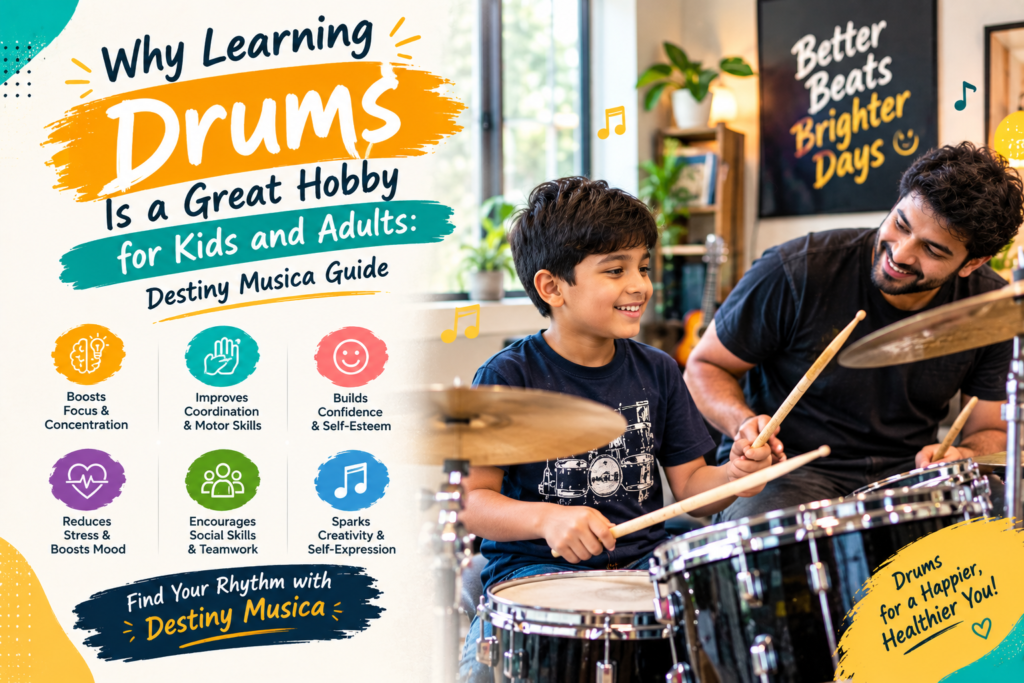
Learning a musical instrument can be an exciting way to develop new skills, express creativity, and enjoy your free time. Among the many instruments available, drums stand out because of their energy, rhythm, and ability to bring people together. Whether you are a parent looking for an engaging activity for your child or an adult searching for a new hobby, joining professional Drums Classes in Mulund can be a rewarding starting point. At Destiny Musica, learners can explore the world of drumming through structured lessons, regular practice, and guidance suited to their learning levels. Drumming is not just about hitting drums; it is about understanding rhythm, developing coordination, building confidence, and discovering the joy of making music.
What Makes Learning Drums a Great Hobby?
Drums are among the most engaging instruments to learn because they combine physical movement with musical expression. Unlike hobbies that involve repetitive activities, drumming challenges your mind and body simultaneously.
Beginners can start with basic beats and gradually progress towards more complex rhythms, fills, and musical styles. From rock and pop to jazz and contemporary music, the possibilities are extensive.
Another advantage is that you do not need previous musical experience to begin. With consistent practice and proper instruction, children and adults can develop their skills at a comfortable pace.
1. Benefits of Learning Drums for Kids
Children naturally enjoy activities that involve movement, sound, and creativity. Drumming brings these elements together while helping them develop useful skills.
Improves Coordination and Motor Skills
Playing drums requires children to coordinate their hands and feet while maintaining a steady beat. As they practise different patterns, they gradually improve their timing, movement, and physical coordination.
These skills develop through regular practice and can also support their participation in other activities that require concentration and coordination.
Develops Concentration and Listening Skills
A drummer must listen carefully, follow musical patterns, and maintain the correct tempo. During lessons, children learn to pay attention to instructions and recognise changes in rhythm.
This process encourages active listening and helps them practise focusing on a task until they become comfortable with it.
Encourages Creativity and Self-Expression
Music provides children with an enjoyable way to express their feelings and ideas. Drumming allows them to experiment with different beats and discover their own musical preferences.
As their confidence grows, they may enjoy playing along with favourite songs, participating in group sessions, or performing in front of others.
Builds Confidence Through Progress
Learning an instrument takes patience. Children may initially struggle to maintain a beat, but mastering a simple rhythm can give them a genuine sense of achievement.
Every new pattern they learn becomes an opportunity to recognise their progress and feel motivated to continue.
2. Why Adults Should Consider Learning Drums
Many adults assume that musical training is something they should have started during childhood. In reality, adults can begin learning drums at any age, provided they have suitable instruction and realistic expectations.
A Creative Break From Everyday Routine
Work responsibilities, family commitments, and daily routines can leave little time for personal interests. Learning drums offers an opportunity to step away from everyday tasks and focus on something enjoyable.
A regular practice session can become a valuable part of your personal routine, giving you time to explore music and develop a new skill.
Helps Develop Focus and Mental Engagement
Drumming involves counting beats, recognising patterns, coordinating movements, and listening to music. These activities keep learners mentally engaged.
For adults who enjoy practical, skill-based hobbies, drumming offers a satisfying combination of learning, repetition, and creative exploration.
A Chance to Explore Musical Interests
Perhaps you have always enjoyed rock music, admired live drummers, or wanted to understand how rhythm supports a song. Learning drums can help you explore these interests more deeply.
As you progress, you can experiment with different genres, learn favourite song patterns, and develop a better understanding of how a band works together.
Makes Learning Something New Enjoyable
Trying a new hobby as an adult can feel challenging, especially when you are unsure where to begin. A structured learning environment makes the process easier to manage.
With regular lessons and achievable practice goals, adults can build their drumming skills without needing to become professional musicians.
3. How Drumming Supports Personal Development
The benefits of learning drums go beyond playing an instrument. The learning process can help children and adults develop habits that are useful in everyday life.
Patience and Discipline
Drumming requires repetition. A beginner may need several practice sessions to play a particular beat comfortably.
Following a regular schedule teaches learners that improvement takes time. Instead of expecting immediate results, they learn to work towards small, realistic goals.
Teamwork and Cooperation
Drummers often perform alongside guitarists, keyboard players, bassists, and singers. To play together successfully, musicians must listen to one another and maintain the right timing.
Group music activities can encourage cooperation, communication, and respect for other performers.
A Greater Appreciation of Music
Once learners understand rhythm, they often begin noticing details in songs that they previously overlooked. They may recognise drum patterns, changes in tempo, and the way percussion supports a melody.
This deeper understanding can make listening to music more interesting and enjoyable.
4. What Do Beginners Learn in Drumming Classes?
Joining professional classes can help beginners build a strong foundation instead of developing habits that become difficult to correct later.
At a well-structured drumming class, the learning process may include the following areas.
Understanding the Drum Kit
Beginners learn about the different parts of a drum kit, including the snare drum, bass drum, toms, hi-hat, and cymbals. They also learn how these components contribute to the overall sound.
Understanding the instrument helps students feel more comfortable before moving on to practical exercises.
Learning Basic Beats and Rhythm
Students begin with simple exercises that introduce timing, counting, and coordination. They practise maintaining a steady beat before progressing to more challenging patterns.
These foundational skills are important because most songs rely on consistent rhythm.
Developing Hand and Foot Coordination
Playing drums involves using different limbs for different parts of a rhythm. Beginners gradually practise coordinating their hands and feet through simple exercises.
With regular guidance, they can develop smoother movements and more consistent timing.
Playing Along With Songs
Once students become comfortable with basic patterns, they can begin practising along with suitable songs.
This makes lessons more engaging and helps them understand how drumming works in real musical situations.
Exploring Different Musical Styles
As their skills develop, learners may explore rock, pop, funk, jazz, and other musical styles. Each genre introduces different rhythms and playing techniques.
Exploring different styles helps students discover the kind of music they enjoy playing most.
5. How to Choose the Right Drumming Classes in Mulund
Choosing the right music school can make a significant difference to a beginner’s learning experience. Before enrolling, consider a few important factors.
Look for Structured Lessons
Beginners benefit from a clear learning path that starts with the basics and gradually introduces more advanced techniques.
Ask whether the classes cover rhythm, timing, coordination, practice routines, and practical playing exercises.
Consider the Instructor’s Approach
A good instructor understands that every learner progresses differently. Children may need engaging activities and simple explanations, while adults may prefer lessons connected to their musical interests.
Look for a learning environment where students can ask questions, practise comfortably, and receive constructive feedback.
Check the Learning Environment
A suitable classroom should provide an organised space for learning and practising. Students should be able to understand the instructor, follow demonstrations, and practise techniques safely.
It is also worth asking about instrument availability, lesson schedules, and opportunities for group practice.
Choose Classes That Match Your Goals
Some learners want to play drums for enjoyment, while others hope to perform with a band or develop more advanced musical skills.
Discuss your goals before joining. This helps you understand whether the course structure and lesson format suit your expectations.
For families and individuals searching online for music classes in mulund, comparing teaching approaches and course options can help them make a more informed decision.
6. Why Consider Destiny Musica for Drumming Lessons?
Finding a music school that supports your interests and learning goals is an important part of beginning your musical journey.
Destiny Musica offers music learning opportunities for students interested in exploring different instruments and vocal styles. For aspiring drummers, structured lessons can provide a starting point for understanding rhythm, developing coordination, and building practical playing skills.
Whether you are introducing your child to music or finally exploring a hobby you have always wanted to try, it is helpful to begin with clear goals and a willingness to practise.
When considering Destiny Musica, enquire about the available drumming course, suitable age groups, class schedules, and learning arrangements. This will help you choose an option that fits your routine and experience level.
You can visit the official website at https://destinymusica.co.in/ to explore the available courses and contact the team for further information.
7. Simple Tips to Improve Your Drumming Skills
Joining a class is a great first step, but consistent practice plays an important role in long-term improvement.
- Start with the basics: Focus on keeping a steady beat before attempting complicated patterns.
- Practise regularly: Short, consistent practice sessions can be more manageable than occasional, lengthy sessions.
- Use a metronome: Practising with a metronome can help you develop a better sense of timing.
- Listen to different music: Pay attention to the drummer’s role in songs across different genres.
- Be patient with progress: Do not compare your beginning with someone else’s years of experience.
- Follow your instructor’s feedback: Correcting technique early can help you develop better playing habits.
- Enjoy the process: Celebrate small improvements and choose songs that keep you motivated.
If you are practising at home, consider your neighbours and family members. Drum kits can be loud, so ask your instructor about suitable practice pads, electronic drums, or other quieter practice options.
Frequently Asked Questions About Learning Drums
1. What is the right age for children to start learning drums?
Children can begin exploring rhythm at a young age, but the appropriate starting point depends on their coordination, attention span, interest, and ability to follow instructions. Speak with the music school about age-appropriate lessons before enrolling.
2. Can adults learn drums without any musical experience?
Yes. Adults can start learning drums without previous musical training. Beginners generally start with basic rhythms, timing, and coordination before progressing to more complex techniques.
3. How long does it take to learn the drums?
The time required depends on practice frequency, previous experience, and individual learning pace. Beginners may learn simple beats within their first few lessons, while developing consistent timing and advanced techniques takes longer.
4. Are drumming classes suitable for complete beginners?
Yes. Beginner-friendly lessons typically introduce the instrument, basic rhythms, correct technique, and coordination exercises. Students can progress gradually as they become more comfortable.
5. Do I need to buy a drum kit before joining classes?
Not necessarily. Ask the music school whether instruments are available during lessons. Beginners can often start learning before deciding whether to purchase a drum kit for home practice.
Final Words: Start Your Musical Journey With Destiny Musica
Learning drums can be an enjoyable way for children and adults to explore creativity, improve coordination, develop musical understanding, and work towards personal goals. You do not need to be naturally talented or have years of musical experience to begin. Interest, regular practice, and the right guidance can help you make steady progress.
If you have been thinking about learning an instrument, now is a good time to take the first step. Explore the available courses, discuss your learning goals, and find a class that suits your interests and schedule.
Visit Destiny Musica to learn more about music lessons and available course options.
Destiny Musica provides extensive training in Indian and Western musical styles. we offer a wide variety of courses, including lessons in guitar, drums, piano, flute, harmonium, keyboard, ukulele, indian singing, western vocals, and other instruments.
Have Any Question?
Want to know more about the course and the pricing? Call us today for batch timing and get started
- 022-4617-5796
- +91 7678035088
- info@destinymusica.com