
Why Learning Drums Is a Great Hobby for Kids and Adults: Destiny Musica Guide
Why Learning an Instrument Can Be a Great After-School Activity for Kids
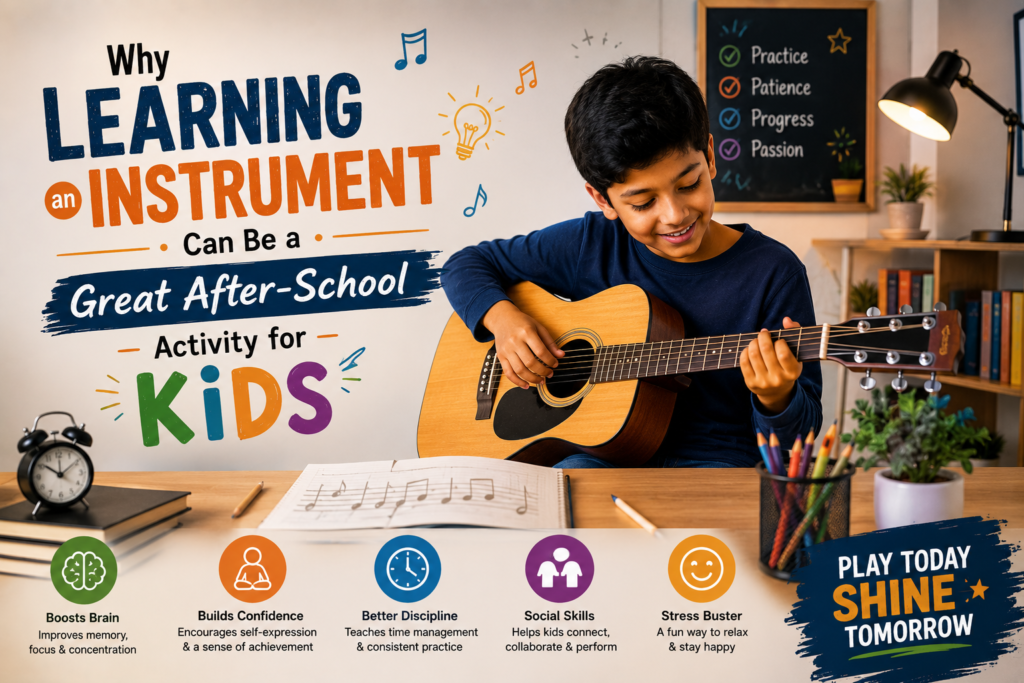
After a busy school day, children need activities that are enjoyable, meaningful, and different from their regular academic routine. Learning an instrument for kids can be an excellent after-school activity because it combines creativity, discipline, self-expression, and fun. Whether a child is interested in guitar, piano, drums, keyboard, flute, or singing, music can become more than just a hobby—it can be a skill they continue developing for years.
For parents, choosing the right after-school activity is not always easy. Sports, art, dance, drama, and music all have their own advantages. However, learning music gives children an opportunity to create something of their own while gradually developing patience, concentration, confidence, and listening skills.
At Destiny Musica, children can explore different musical interests in a supportive learning environment. With the right guidance and regular practice, even beginners can enjoy the process of discovering their musical abilities.
Why Should Kids Learn a Musical Instrument After School?
After-school hours are an important part of a child’s development. Instead of spending all their free time on screens or academic work, children can benefit from an activity that engages both their mind and creativity.
Learning an instrument provides that balance.
A child may initially join a music class simply because they like a particular instrument. Over time, regular lessons and practice can teach them valuable habits that are useful beyond music.
1. Music Helps Improve Concentration
Learning an instrument requires attention. Children need to listen carefully, follow rhythm, remember notes, and coordinate their hands or voice.
For example, when learning a simple piano or keyboard piece, a student may have to concentrate on both hands while keeping track of timing. This naturally encourages focused attention.
With regular practice, children can become more comfortable spending time on one task without constantly switching between distractions.
2. It Develops Patience and Discipline
No child becomes an excellent musician overnight.
A new song may sound difficult during the first few practice sessions. There may be mistakes, missed notes, or rhythm problems. But when children continue practicing and eventually play the song correctly, they experience a valuable lesson: improvement takes time.
This is one of the biggest benefits of learning music.
Children gradually understand that consistent effort can produce results. That mindset can also help them approach schoolwork, sports, and other activities with greater patience.
Music Can Boost a Child’s Confidence
Performing a song successfully can give children a genuine sense of achievement.
Imagine a child who struggled to play a particular melody a few weeks ago. After regular practice, they finally perform it confidently in front of their parents or classmates. That small achievement can make a big difference to their self-confidence.
Music classes can provide many such moments.
Children don’t necessarily have to perform on a large stage. Even playing for family members or participating in a small class activity can help them become more comfortable expressing themselves.
Learning Without the Pressure of Competition
One advantage of music is that progress does not have to be measured only against other children.
A good teacher can help students focus on their own improvement. Instead of asking, “Am I better than someone else?”, children can learn to ask, “Can I play this better than I did last week?”
That shift creates a healthier learning experience.
It Encourages Creativity and Self-Expression
Children naturally have creative ideas, but they need opportunities to express them.
Music provides one of those opportunities.
Once children become comfortable with an instrument, they can experiment with melodies, rhythms, sounds, and eventually their own musical ideas. A child playing guitar might create a simple tune, while a young keyboard student may experiment with different sounds.
Music also gives children a way to express emotions that they may not always know how to communicate through words.
This makes an instrument more than an educational tool. It becomes a creative outlet.
Learning an Instrument Improves Coordination
Playing an instrument often requires multiple actions at the same time.
A drummer needs to coordinate different movements while maintaining rhythm. A guitarist has to manage chords and strumming. A pianist may use both hands independently while following timing and notes.
This type of practice can help children develop hand-eye coordination, timing, and motor control.
The process may seem challenging initially, but children generally become more comfortable as they practice regularly.
Music Teaches Children How to Listen
Good musicians don’t only learn how to play—they learn how to listen.
Children gradually become aware of pitch, rhythm, tempo, tone, and musical patterns. They learn to notice whether something sounds correct and make adjustments accordingly.
These listening habits can also make music lessons more interactive. Instead of simply copying a teacher, children begin to understand what they are hearing.
That is an important step in developing musical awareness.
It Can Become a Healthy Alternative to Screen Time
For many parents, managing children’s screen time has become a daily challenge.
An after-school music class offers a constructive alternative. Instead of spending another hour watching videos or playing games, children can spend that time learning something they can physically create.
This doesn’t mean children need to completely avoid screens. The goal is balance.
A regular music lesson, followed by a short practice session at home, can become a healthy part of a child’s weekly routine.
Choosing the Right Instrument for Your Child
There is no single “best” instrument for every child.
The right choice usually depends on the child’s age, interests, personality, and willingness to practice.
Piano or Keyboard
Piano and keyboard are popular starting points for children because the notes are clearly arranged and students can quickly understand basic musical patterns.
Children who enjoy melodies and structured learning may particularly enjoy piano or keyboard lessons.
Guitar
Guitar can be a great choice for children who enjoy popular songs, melodies, and rhythm-based music.
Parents looking for structured lessons can explore guitar classes in Mulund where children can gradually learn chords, strumming, rhythm, and songs according to their level.
Drums
Some children naturally enjoy rhythm and energetic activities. For them, drums can be an exciting choice.
Drumming involves coordination, timing, and concentration while allowing children to express themselves physically through rhythm.
Singing
Not every child needs to start with an instrument.
Children who enjoy singing can explore vocal training. Singing lessons can help them understand pitch, breathing, rhythm, pronunciation, and musical expression.
Flute, Harmonium and Ukulele
Other instruments such as flute, harmonium, and ukulele can also provide interesting learning opportunities. The best approach is to introduce children to different options and see which one genuinely interests them.
What About Drama and Other Creative Activities?
Music doesn’t have to compete with other creative interests.
Some children may enjoy both music and theatre. Drama classes in Mulund, for example, can help children develop communication, confidence, body language, and storytelling skills.
Parents don’t necessarily need to choose one activity forever. Depending on the child’s schedule and interest, music can complement activities such as drama, dance, art, or sports.
The key is avoiding an overloaded timetable.
How Parents Can Support Musical Learning at Home
Parents don’t need to be musicians to support their child’s progress.
A few simple habits can make a significant difference.
Create a Regular Practice Routine
Instead of forcing long practice sessions, encourage short and consistent practice.
Even 15–20 minutes of focused practice can be useful for beginners when done regularly.
Encourage Rather Than Criticise
Children will make mistakes. That’s part of learning.
Rather than focusing on every wrong note, parents can appreciate effort and encourage the child to keep improving.
Celebrate Small Achievements
Playing a new song, learning a difficult chord, or completing a practice goal deserves recognition.
Small celebrations can make children feel that their effort matters.
Allow Children to Enjoy Music
Not every practice session needs to feel like homework.
Let children listen to songs, discover different artists, experiment with sounds, and talk about the music they enjoy. This can help maintain their natural interest.
How to Find the Right Music Classes for Kids
Choosing a music school is an important decision because the teacher and learning environment can strongly influence a child’s experience.
Parents should consider factors such as:
- Whether the classes are suitable for beginners
- Whether teachers understand how to work with children
- Whether lessons are practical and engaging
- Whether the class size allows sufficient attention
- Whether different instruments and musical styles are available
- Whether the schedule is convenient
- Whether the learning approach focuses on both technique and enjoyment
For families looking for music classes in Mulund, visiting the institute and understanding its teaching approach can be a useful first step.
A good music class should make children feel comfortable asking questions, making mistakes, and gradually improving.
Frequently Asked Questions
-
Is learning an instrument good for children?
Yes. Learning an instrument can support concentration, patience, creativity, coordination, confidence, listening skills, and self-expression while giving children an enjoyable hobby.
-
What is the best age for a child to start learning music?
There is no fixed age that works for every child. Many children can begin with age-appropriate musical activities when they show interest and can follow basic instructions. The teaching method should be adapted to their age and ability.
-
Which instrument is easiest for kids to learn?
There isn’t one instrument that is easiest for every child. Piano, keyboard, ukulele, guitar, and basic percussion can all be good starting options depending on the child’s interest and learning style.
-
How much should a child practice an instrument?
For beginners, short and consistent practice sessions are often more effective than occasional long sessions. A teacher can recommend an appropriate practice routine based on the child’s age and level.
-
Can music improve a child’s academic performance?
Music should not be treated as a guaranteed way to improve grades. However, learning an instrument can encourage habits such as concentration, listening, patience, memory, and consistent practice, which may be useful in other areas of learning.
Final Words
Learning an instrument can be one of the most rewarding after-school activities a child can experience. It gives them something creative to work toward while teaching patience, concentration, discipline, coordination, and confidence. More importantly, music can become a source of enjoyment that stays with them well beyond their school years.
The goal doesn’t always have to be to create a professional musician. Sometimes, the greatest benefit is simply seeing a child become more confident, creative, patient, and comfortable expressing themselves.
For parents exploring music classes in Mulund, choosing a supportive learning environment and an instrument that genuinely interests the child can make the journey much more enjoyable.
Ready to introduce your child to the world of music? Explore suitable classes, choose an instrument that matches their interests, and give them the opportunity to learn, create, and grow through music.
Destiny Musica provides extensive training in Indian and Western musical styles. we offer a wide variety of courses, including lessons in guitar, drums, piano, flute, harmonium, keyboard, ukulele, indian singing, western vocals, and other instruments.
Have Any Question?
Want to know more about the course and the pricing? Call us today for batch timing and get started
- 022-4617-5796
- +91 7678035088
- info@destinymusica.com