
Keyboard Classes in Mulund West for Kids and Adults: Learn at Destiny Musica
Why Join Professional Tabla Classes in Mulund at Destiny Musica?
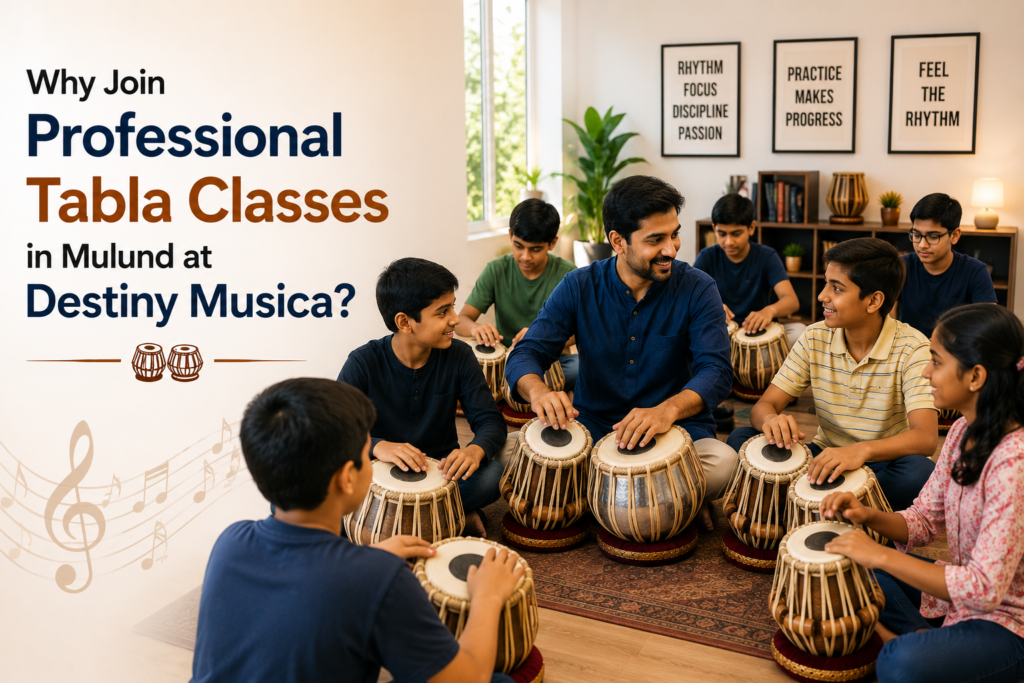
If you’ve been searching for tabla classes in Mulund, chances are you’ve already realised that finding the right teacher matters just as much as finding the right instrument. Tabla isn’t something you can casually pick up from YouTube tutorials and expect to sound good six months down the line. It needs a teacher who can correct your hand position before it becomes a habit, guide your rhythm sense, and slowly build your understanding of taals in a way that actually sticks. That’s exactly the gap Destiny Musica fills for students across Mulund.
In this blog, we’ll talk about why learning tabla under proper guidance makes such a big difference, what a structured tabla learning journey actually looks like, and why Destiny Musica has become a name people trust for music education in this part of the city.
Tabla Is Deceptively Difficult to Self-Teach
At first glance, tabla looks simple. Two drums, a set of hand strikes, and a rhythm. But anyone who’s tried learning it without a teacher knows how quickly that assumption falls apart. The way your fingers strike the syahi, the pressure you apply with your palm, the exact angle of your wrist, all of these small details decide whether your sound is crisp and correct or muddled and inconsistent.
Without a teacher watching closely, it’s incredibly easy to develop wrong habits early on. And once those habits set in, they’re far harder to unlearn later than to get right from the start. This is really the biggest reason structured tabla classes matter so much, especially in the first few months of learning.
What Makes Learning Tabla at Destiny Musica Different
Individual Attention to Technique
Every student’s hands are different, and so is their sense of rhythm when they walk in for their first class. At Destiny Musica, instructors spend real time observing how each student strikes the drums and correct small technical issues before they turn into long-term habits.
Structured Progression, Not Random Lessons
A lot of informal learning jumps around without any real sequence. Destiny Musica follows a structured path, starting with basic bols and hand positioning, moving into simple taals, and gradually building toward more complex rhythmic patterns and layakari as the student progresses.
Balance of Theory and Practice
Understanding the “why” behind a taal or a bol pattern makes a huge difference in how naturally a student can improvise later. Classes here don’t just focus on repetition, they build a genuine understanding of rhythm theory alongside the practical playing.
Regular Practice Guidance
Between classes, students often struggle with knowing what exactly to practice and how much. Destiny Musica gives clear, manageable practice goals after every session, so progress actually continues at home and not just inside the classroom.
Who Should Consider Joining Tabla Classes?
Tabla isn’t something reserved for a specific age group or background. Some common types of students who join include:
- Kids who are just being introduced to Indian classical rhythm and discipline
- Adults picking up an instrument they always wanted to learn but never had the chance to
- Vocalists and dancers who want a stronger sense of rhythm to support their main practice
- Working professionals looking for a creative, stress-relieving hobby outside their daily routine
Whatever category you fall into, the starting point is the same, patient, correct guidance that builds a solid foundation.
Benefits of Learning Tabla Beyond Just Music
Sharper Concentration
Tabla demands your full attention on rhythm, timing, and coordination all at once. Over time, this naturally improves focus, something students often notice carrying over into other parts of their life too.
Better Hand-Eye and Motor Coordination
The independent movement required from both hands strengthens coordination in a way few other activities do, especially for younger learners.
A Genuine Stress Reliever
There’s something about sitting down, tuning out everything else, and losing yourself in rhythm that works as a surprisingly effective way to unwind after a long day.
Cultural Connection
For many students, learning tabla is also a way of staying connected to Indian classical roots, something that often gets missed in today’s fast digital pace of life.
A Peek Into How Tabla Classes Are Structured at Destiny Musica
Getting Comfortable with the Instrument
Early classes focus on posture, hand positioning, and understanding the two drums, the dayan and the bayan, before moving into actual bols.
Learning Basic Bols and Taals
Students start with foundational bols like Na, Tin, Dha, and Ge, gradually combining them into simple taal cycles like Teentaal.
Building Rhythmic Vocabulary
As confidence grows, students are introduced to more layered patterns, kaidas, and simple compositions that challenge both hands independently.
Performance Readiness
For students who want to eventually perform, whether solo or accompanying vocalists and other instruments, later stages focus on stage confidence and playing in sync with other musicians.
Common Mistakes Beginners Make Without Proper Guidance
It helps to know what to watch out for, even before your first class starts.
Rushing Through Bols Without Clarity
New learners often try to play fast before they can play clean. Speed without clarity just creates messy, unclear sound, and it’s a habit that’s genuinely hard to fix once it settles in.
Ignoring Left-Hand Development
A lot of self-taught players focus almost entirely on the right hand and treat the bayan as an afterthought. Proper training makes sure both hands develop together from the start, which is essential for a balanced, full sound.
Skipping Rhythm Counting
It’s tempting to just imitate sounds without actually counting the taal cycle in your head. This might work for very simple patterns, but it falls apart quickly once compositions get more layered, which is why counting is drilled in early at Destiny Musica.
Inconsistent Practice
Long, irregular practice sessions once a week rarely build muscle memory the way shorter, consistent daily practice does. Instructors here usually guide students toward small, realistic daily routines rather than occasional long sessions.
Destiny Musica Isn’t Just About Tabla
While tabla often brings students through the door, many end up exploring other courses once they experience the teaching quality here. Destiny Musica also runs well-structured music classes in Mulund across a wide range of instruments and styles, including guitar, drums, piano, flute, harmonium, keyboard, ukulele, Indian singing, and Western vocals.
For anyone specifically interested in guitar, the guitar classes in Mulund at Destiny Musica follow the same structured, technique-first approach, making it a natural next step for students who want to explore more than one instrument.
And music isn’t the only creative outlet on offer. Students looking to build stage presence, confidence, and expression often pair their music learning with the drama classes in Mulund available at Destiny Musica, giving them a more rounded creative development beyond just their instrument of choice.
How to Choose the Right Tabla Class
If you’re comparing options before you commit, here’s what’s genuinely worth checking.
- Teacher’s background and playing experience – A good performer doesn’t always make a good teacher, so look for someone who can actually explain and correct, not just play well themselves.
- Class structure – Ask whether lessons follow a syllabus or are taught randomly session to session.
- Batch size – Smaller batches or one-on-one sessions generally mean more individual correction time.
- Practice support – Find out if the institute gives clear practice instructions between classes, not just lesson content during class time.
- Flexibility – Whether you’re a student, a working professional, or a parent enrolling a child, class timings should realistically fit your schedule.
Frequently Asked Questions
- Do I need any prior musical experience to join tabla classes?
Not at all. Most students start as complete beginners, and classes at Destiny Musica are structured to build understanding right from the basics.
- What age is ideal to start learning tabla?
There’s no strict age limit. Children as young as 6 to 7 years old can start with simplified lessons, and adults of any age can begin whenever they’re ready.
- How long does it take to get comfortable playing tabla?
This depends on practice consistency, but most students start playing simple taals confidently within the first few months of regular classes.
- Are classes available on weekends for working professionals and students?
Yes, Destiny Musica offers flexible scheduling, including weekend batches, to accommodate students with different daily routines.
- Can I learn tabla alongside another instrument or vocal training?
Yes, many students at Destiny Musica combine tabla with vocals or another instrument, since rhythm training often strengthens their overall musicality.
- Does Destiny Musica offer a trial or demo class before enrolling?
Yes, a demo class is generally available so new students can experience the teaching style and comfort level before committing to a full course.
Final Words
Learning tabla is as much about discipline and patience as it is about talent, and having the right guidance from the very beginning makes all the difference between slow, frustrating progress and steady, confident growth. Whether you’re a parent looking to enrol your child, a professional seeking a creative escape, or someone who’s simply always wanted to learn this beautiful instrument, the environment you learn in matters.
Destiny Musica provides extensive training in Indian and Western musical styles, with a wide variety of courses including guitar, drums, piano, flute, harmonium, keyboard, ukulele, Indian singing, Western vocals, and other instruments, alongside dedicated tabla training designed to build real technique from day one.
If you’re in Mulund and ready to start your tabla journey the right way, get in touch with Destiny Musica today and book your first class.
Have Any Question?
Want to know more about the course and the pricing? Call us today for batch timing and get started
- 022-4617-5796
- +91 7678035088
- info@destinymusica.com